Gasoline Filter Screen: what’s changing, what matters now
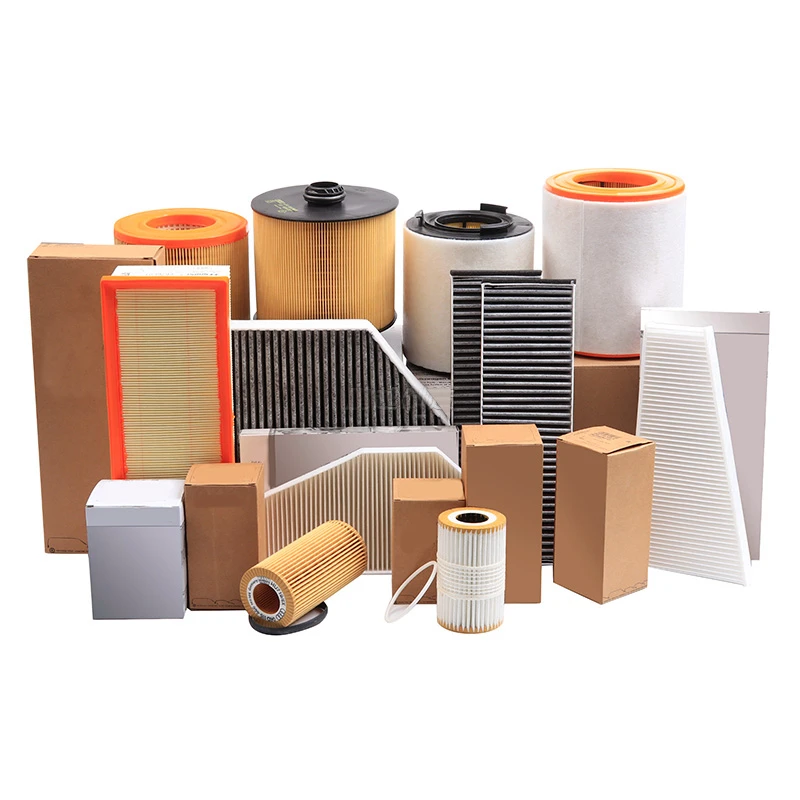
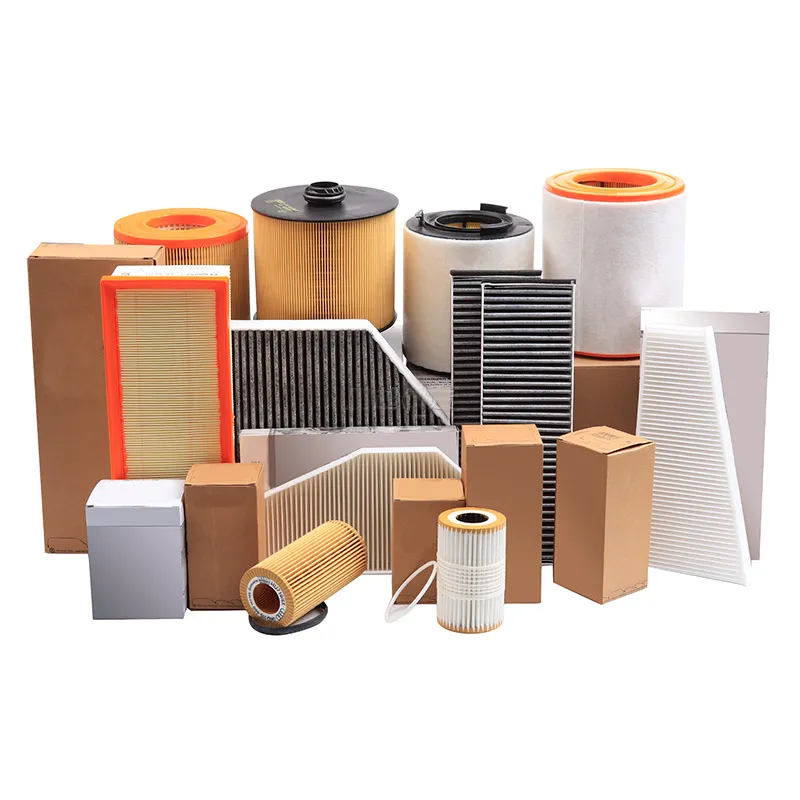
If you work around fuel systems long enough, you learn that the small parts are usually the ones that save the day. Case in point: the Gasoline Filter Screen. It’s tiny, often overlooked, yet it quietly protects injectors and pumps from the kind of particles that turn maintenance into a saga. The factory I visited in Hebei—Niujiatun Village, Gexianzhuang Town, Qinghe County—builds both air and fuel filtration parts, and the cross-pollination of know‑how is obvious in the details.
Industry trends, briefly
Two currents define 2025: tighter injector tolerances and fuel variability (hello E10–E20). That means the Gasoline Filter Screen needs finer capture at lower pressure drop. Many customers say they’re shifting from brass+nylon to all‑metal 316L mesh for higher ethanol exposure. Surprisingly, we’re also seeing modular screens that snap into quick connectors, cutting assembly time on the line.

Where it’s used
- In-tank pump inlet screens and pump outlet “tea-strainers”
- Injector inlet baskets (multiport and GDI)
- Quick connector line screens and small-engine carburetors
- Generators, motorcycles, garden equipment—any gasoline-fed IC engine
Materials, process, and testing
Typical Gasoline Filter Screen media: sintered 316L or woven 304 SS mesh; sometimes PA66 or PPS for economy builds. Frames are PA6‑GF30, brass, or aluminum. Process flow (short version): mesh slitting → deep-draw or roll form → laser or resistance weld → overmold (if plastic frame) → 100% visual check → pressure-drop and leak test → cleanliness validation. To be honest, the better plants run ISO 19438-style particle efficiency checks and verify ethanol compatibility.
Product specifications (typical)
| Parameter | Typical Spec | Notes |
|---|---|---|
| Micron rating | ≈ 20–80 μm | Injector baskets trend 20–40 μm |
| Media | 316L sintered or 304 woven; PA66/PPS | Choose by ethanol content and temp |
| Operating temp | -40 to 120°C | Short peaks up to 135°C |
| Fuel compatibility | E0–E20 gasoline | Higher ethanol: verify polymer choice |
| Pressure drop @ 80 L/h | ≈ 8–15 kPa | Real‑world use may vary |
| Service interval | 30,000–60,000 km | Depends on fuel cleanliness |
| Efficiency (example) | ≥95% @ 40 μm | ISO 19438-style counting |
Vendor comparison (indicative)
| Vendor | MOQ | Lead Time | Quality System | Customization | Price Index |
|---|---|---|---|---|---|
| JYFilter (Hebei) | ≈ 5,000 pcs | 2–4 weeks | ISO 9001 / IATF-ready (confirm docs) | Mesh, frame, OD/ID, snap‑fit | $$ |
| Vendor A (EU) | ≈ 10,000 pcs | 4–6 weeks | IATF 16949 | High tooling accuracy | $$$ |
| Vendor B (APAC) | ≈ 3,000 pcs | 2–3 weeks | ISO 9001 | Basic variants | $ |
Customization and real-world feedback
OEM teams often request non-standard ODs for injector baskets and a tighter 25 μm cut for GDI. One fleet client told me clogging incidents dropped 41% after switching to a larger surface-area Gasoline Filter Screen. Actually, the win was lower pressure drop at cold start.
Test data, standards, and certifications
- Particle efficiency: ≥95% @ 40 μm (ISO 19438-style).
- Pressure drop curves across 40–120 L/h, calibrated at 20°C gasoline.
- Material compliance: RoHS/REACH; automotive suppliers should maintain ISO 9001; IATF 16949 preferred—ask for current certificates.
- Air-side know-how from ISO 5011 (air filter testing) often informs pleat/flow modeling for companion products.
Quick case notes
Case A (motorcycle OEM, SEA): switched to 316L sintered Gasoline Filter Screen, E20 compatible; warranty claims down ≈28% in dusty regions. Case B (genset maker): retooled to snap-fit basket with larger open area; startup stumble complaints fell within two weeks of rollout. Not perfect science, but the pattern’s there.
Origin matters: the Hebei facility (Qinghe County, Xingtai) sits within a dense auto-parts cluster—tooling access is fast, which, I guess, is why custom screens hit pilot runs in under a month.
Related product link
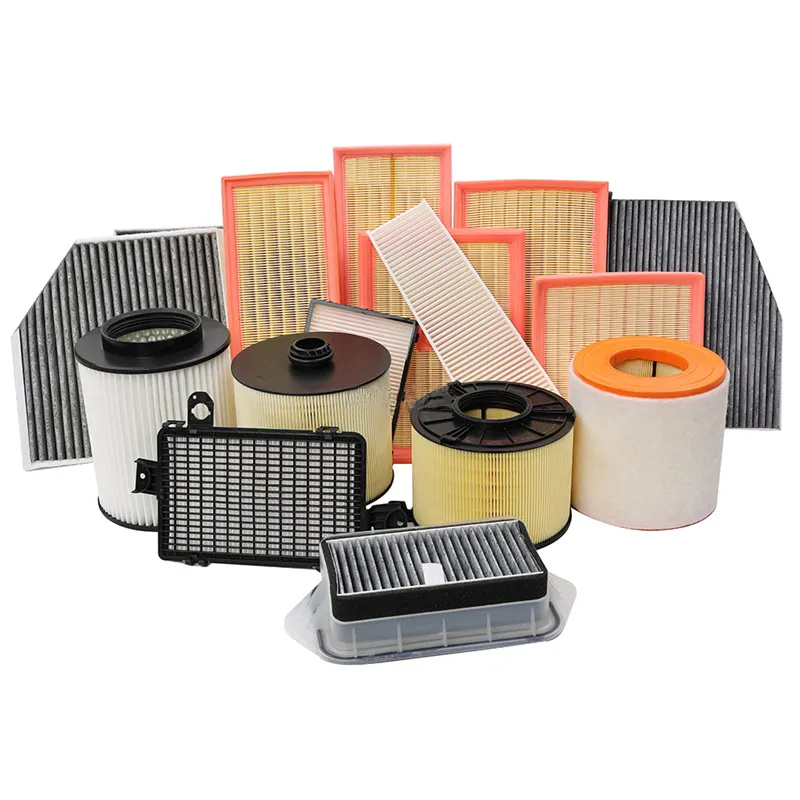
The company’s automotive engine air filtration program complements the Gasoline Filter Screen line with shared testing discipline and airflow modeling.
Authoritative references
- ISO 19438: Fuel filters for internal combustion engines — Particle separation efficiency by particle counting.
- ISO 5011: Inlet air cleaning equipment for internal combustion engines and compressors — Performance testing.
- SAE filtration test practices for fuel systems (e.g., SAE J standards for gasoline fuel filter evaluation; consult latest revisions).
-
Guide on how often do you need to replace engine air filterNewsApr.16,2026
-
Learn how often do you replace air filter in car for engine healthNewsApr.09,2026
-
How Often Do You Replace Car Air Filter For Optimal Engine PerformanceNewsApr.07,2026
-
How Often Do You Replace Engine Air Filter For Optimal Vehicle PerformanceNewsApr.04,2026
-
Understanding How Often Does Engine Air Filter Need to Be Replaced for Optimal PerformanceNewsMar.31,2026
-
How Often Engine Air Filter Change Impacts Performance and LongevityNewsMar.28,2026
-
Understanding How Often to Replace Your Car Air Filter for Optimal PerformanceNewsMar.26,2026
Related Products